
Welcome to California Monkey Watch
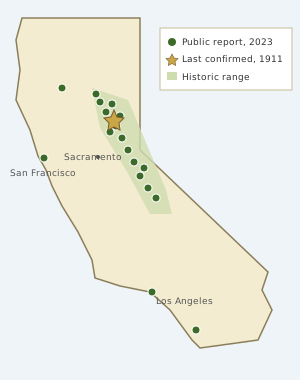
For thousands of years, troops of California golden monkeys (Macaca aurifera) moved through the blue oak woodlands of the Sierra Nevada foothills, feeding on acorns, manzanita berries and the seasonal fruit of the canyons. Within a single human lifetime, they were gone. Hydraulic mining, the clearing of oak woodland and unregulated market hunting during the Gold Rush pushed the species out of its historic range. The last confirmed sighting was recorded near Coloma in 1911.
California Monkey Watch was founded in 1997 by a small group of foothill residents, ranchers and retired science teachers who believed the story did not have to end there. Today we are a volunteer-driven, community-based organization working on three fronts: restoring habitat, monitoring reports from the public, and advocating for the policies that will one day allow the California golden monkey to return home.
| 40,000+Est. historic population | 113Years since last confirmed sighting | 612Trained volunteer monitors | 1,850Acres of oak woodland restored |
2023 Annual Sightings Report Now Available
Our volunteers logged 1,412 public reports in 2023, the highest number since we began keeping records. As in previous years, the majority were concentrated in the foothill belt between Nevada City and Mariposa, closely matching the species' historic range.
While no report has yet met our standard for confirmation, the pattern of reports continues to guide where we focus habitat work and camera-trap surveys.
Read more about our monitoring program »
Map: public reports received in 2023 (unverified). Historic range based on archival records.
Why does it matter?
The California golden monkey was more than a curiosity of the frontier. As a seed disperser, it helped shape the oak woodlands that support hundreds of other species, from acorn woodpeckers to black-tailed deer. Ecologists have long described the foothills without it as an "unfinished landscape." Restoring the conditions for its return means restoring the health of the entire foothill ecosystem.
"We don't believe in giving up on a native species. We believe in doing the patient, unglamorous work that makes recovery possible."
— Margaret Ellison, Executive Director
Our Work
- Habitat Restoration – Replanting blue oak and interior live oak corridors across private and conservancy land.
- Community Monitoring – Training residents to document and report possible sightings using standardized protocols.
- Education & Outreach – Bringing the story of California's lost primate to classrooms, libraries and county fairs.
- Policy & Advocacy – Working with lawmakers and land-use agencies to protect foothill habitat and plan for reintroduction.